94% of Employees Wouldn’t Quit if the Employee Learning Opportunities Were Right
NRF 2026 Show Recap: What’s Next Now for Retail
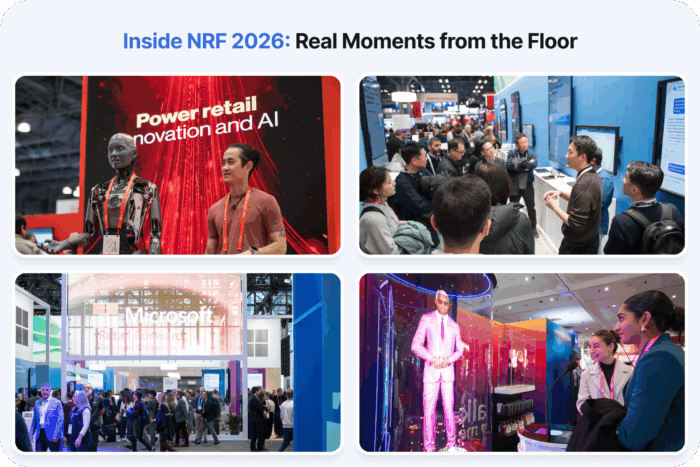
New York City — January 11–13, 2026 brought the retail world’s largest gathering together for NRF’s Retail’s Big Show, the annual bellwether for where retail is and where it’s headed. Whether you couldn’t attend or were overwhelmed by all the ideas, here’s a distilled, actionable recap that frontline retail leaders can use to shape strategy, operations and customer value in 2026 and beyond.
The ‘Next Now’ Was Real
This year’s theme, The Next Now, wasn’t just marketing copy — it was a lens for every keynote, panel and expo demo. Retailers large and small are pivoting from best practices to adaptive practices — strategic moves informed by real‑time data, intelligent automation, and human‑plus‑AI collaboration.
From the halls of the Jacob K. Javits Convention Center to the packed sessions with industry luminaries, one truth stood out: bricks and clicks are no longer separate — they’re the foundation of retail’s future operating model.
1. AI Everywhere — With a Strategic Twist
If you heard AI more times than you heard “customer experience” at NRF, you weren’t imagining it. Across expo halls and stages, AI shifted from ‘nice to have’ to strategic backbone for personalization, operations, pricing, and customer discovery.
But here’s the nuance:
- Retailers aren’t just adopting AI. They’re operationalizing it across the value chain — from inventory forecasting to frontline associate support.
- Talks weren’t about what AI can do but how humans and AI collaborate to deliver value faster and with precision.
Action takeaway: Audit your current AI footprint across merchandising, customer engagement, inventory and fulfillment. Prioritize quick wins that intersect human judgment with AI execution — for example, real‑time inventory alerts for store associates or AI‑powered price optimization in high‑turn categories.
2. Agentic AI: The New Competitive Frontier
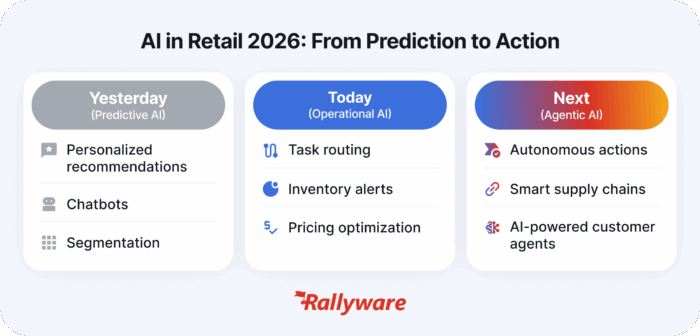
One of the most talked‑about concepts emerging at NRF 2026 was agentic AI — systems that don’t just recommend outcomes but act autonomously on behalf of retailers and customers.
Consider what this means:
- Autonomous pricing models that react to demand and competitor pricing in real time.
- Supply chain agents that reorder stock based on predicted demand and delivery performance.
- Consumer agents that shop for customers based on budgets, preferences and past behavior.
This is where AI moves from support to strategy. Retailers that harness this shift can improve margin, reduce waste and create agile customer engagement models — while those slow to adapt risk becoming price takers rather than value leaders.
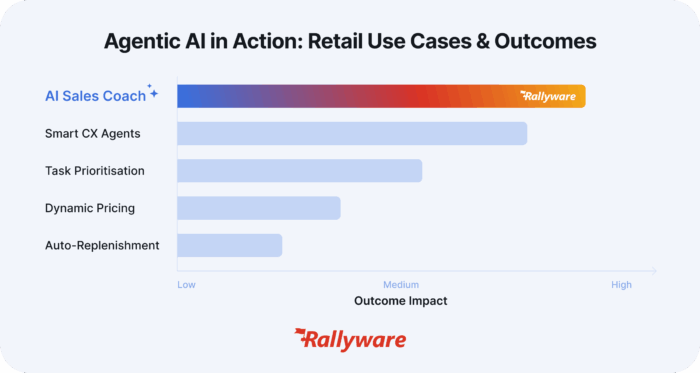
Action takeaway: Evaluate your readiness for agentic AI. Start by prioritizing use cases with measurable ROI — dynamic pricing, automated replenishment, or AI‑assisted customer journeys.
3. Frontline Associates Are a Retail Differentiator
While flashy tech stole headlines, many conversations at NRF reaffirmed the enduring value of the in‑store experience powered by informed associates.
Customers still value human interaction — especially when it’s timely, relevant and enables quick purchase decisions.
Strategies frontline leaders should consider:
- AI‑enabled tools for associates: Equip staff with real‑time inventory visibility, personalized customer preferences and guided product recommendations.
- Task automation: Free associates from routine tasks like manual stock checks so they can focus on value‑added engagement.
- Training on tech adoption: A retail associate empowered by technology generates higher conversion and net promoter scores.
Action takeaway: Prioritize tools that empower the field — not replace them — and map those tools directly to KPIs like conversion, speed of service and average basket value.
4. Customer Experience Gets More Personal — and More Valuable
The retail model is shifting from transactions to ongoing relationships. NRF 2026 spotlighted how brands are using technology to create frictionless, context‑aware, personalized journeys across channels.
This includes:
- AI‑driven discovery that predicts the best product or service.
- Augmented reality previews and in‑store digital assistants.
- Integrated loyalty systems that reward value received versus points accrued.
Retailers won’t win merely by being convenient — they’ll win by being relevant and value‑rich at every interaction.
Action takeaway: Reframe your loyalty and engagement programs around continuous value propositions — personalized offers, real‑time savings, or experiential moments — instead of only transactional incentives.
5. In‑Store Innovation Still Matters
Despite the AI wave, the physical store remains a growth engine — when done right. NRF showcased phygital integrations, RFID‑enabled experiences, frictionless checkout, and interactive displays that make shopping immersive.
Don’t treat your store as a commodity — treat it as an experiential stage:
- Smart shelf tech increases conversion and operational efficiency.
- Interactive product zones tell brand stories and shorten purchase cycles.
- Seamless checkout experiences reduce friction and abandonment.
Action takeaway: Plan 2026 investments that enhance physical retail, not just digitize it — because the store will be a cornerstone of omnichannel success.
6. Where Retail Tech Meets Business Outcomes
Across sessions and exhibitor demos, one insight was consistent: technology alone isn’t success — it’s success when tied to operational and financial outcomes.
Smart retailers are showing measurable improvements by:
- Reducing waste and shrink through real‑time analytics.
- Boosting transaction value through associate guidance in the customer interaction.
- Increasing lifetime value through personalized experiences powered by AI.
Action takeaway: Tie every tech investment to a dollar outcome — whether it’s reduced cost, increased revenue, improved efficiency, or higher retention.
FAQ: NRF 2026 Big Show
Q1: What was the biggest theme at NRF 2026?
AI was the dominant theme, evolving from supportive functions to agentic, action‑oriented use cases.
Q2: Did NRF 2026 focus only on technology?
No. While tech was central, sessions also emphasized people‑centered strategies, frontline tools, and customer experience design.
Q3: Is physical retail still relevant in 2026?
Absolutely — innovation in stores, experiential touchpoints, and associate empowerment signals strong ongoing value in physical channels.Q4: What should retailers prioritize post‑NRF?
Focus investments on AI‑enabled operations, associate tools, customer experience personalization, and ROI‑driven tech adoption.
News and Insights on Workforce Training & Engagement
We’re among top-notch eLearning and business engagement platforms recognized for effective training and talent development, helping to empower distributed workforces
Subscribe