How Store Operations Can Orchestrate the Sales Floor to Drive More Revenue
The In-Aisle Decision Moment: Retail’s Missing Moment of Truth
Part 1 of 4 in our Road to NRF series, inspired by Juan Molina’s conversation with Ron Thurston on Retail in America.
In 2011, Google gave marketers a name for something they could feel but couldn’t measure. They called the research shoppers do before they buy the Zero Moment of Truth, and an entire industry reorganized around winning it.
Fifteen years later, that research happens in a chat window. Synchrony’s 2025 holiday survey found that 56% of consumers used generative AI while shopping, with product comparison and price hunting leading the way. BCG reports that shopping-related GenAI use grew 35% in nine months.
So your customer walks in with an answer already in their pocket. Then they reach the aisle. And that is where most retail strategies go quiet.
The moment nobody owns
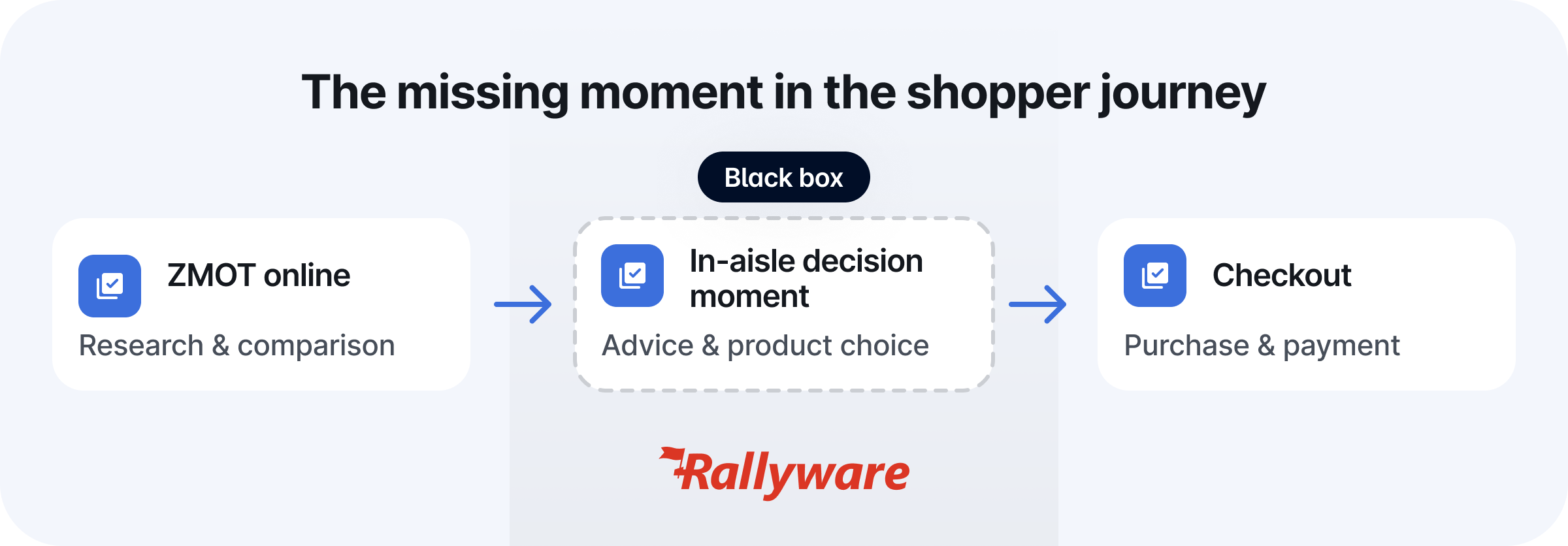
At Rallyware, we call it the in-aisle decision moment: the few seconds when a product, a shelf, a shopper and an associate meet, and a decision gets made.
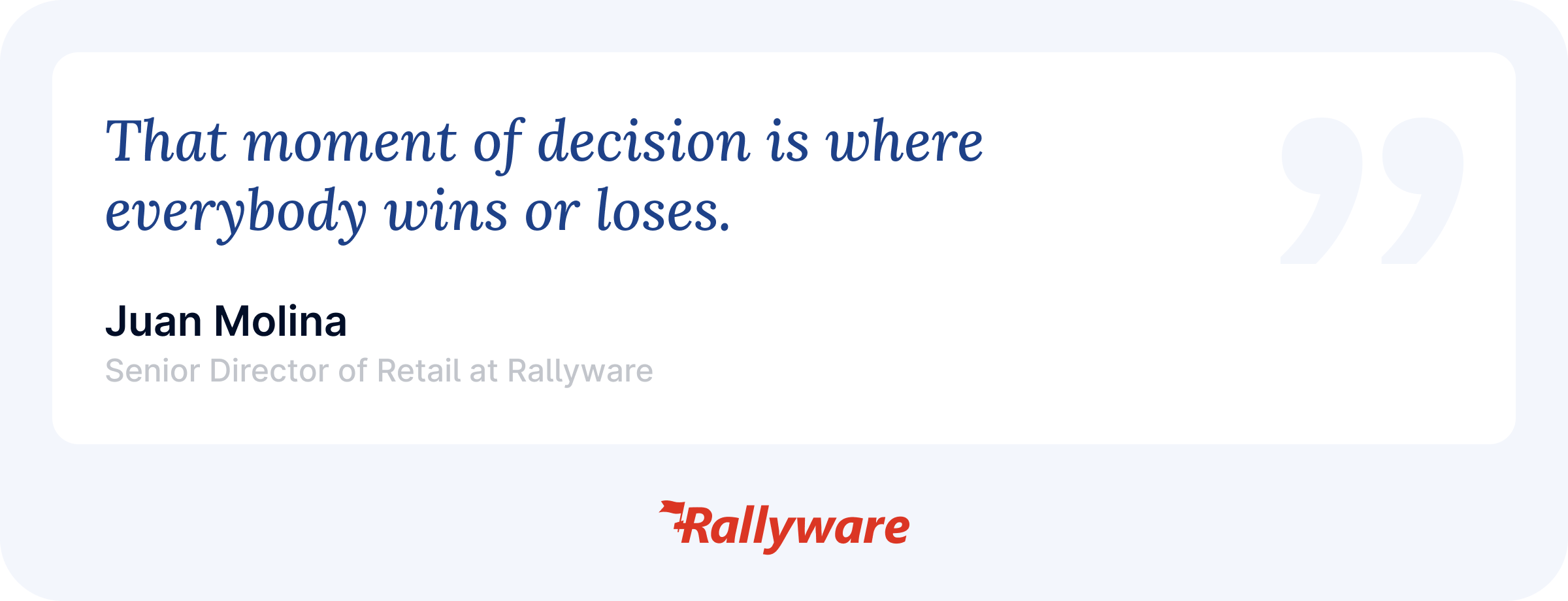
“That moment of decision is where everybody wins or loses,” Juan Molina, Senior Director of Retail at Rallyware, told Ron Thurston. “The brand wins or loses, the retailer wins or loses, the customer wins or loses, and that frontline associate wins or loses.”
Four stakeholders. One moment. And as Ron put it in his opening, nobody actually owns it. The brand made the product. The retailer owns the floor. The systems in the store route orders, count traffic and set prices. None of them is accountable for what the associate says when a shopper picks up a box and asks, “Is this the right one for me?”
Why the store is still a black box
Juan spent the first seven years of his career in marketing services, chasing the 360-degree view of the customer. Two decades later, he says the store “continues to be a black box.”
The reason is simple. Retail can measure what happens before the shopper arrives and what happens at checkout. It struggles to measure what happens in between, because the person who shapes that moment has been left out of the data model entirely.
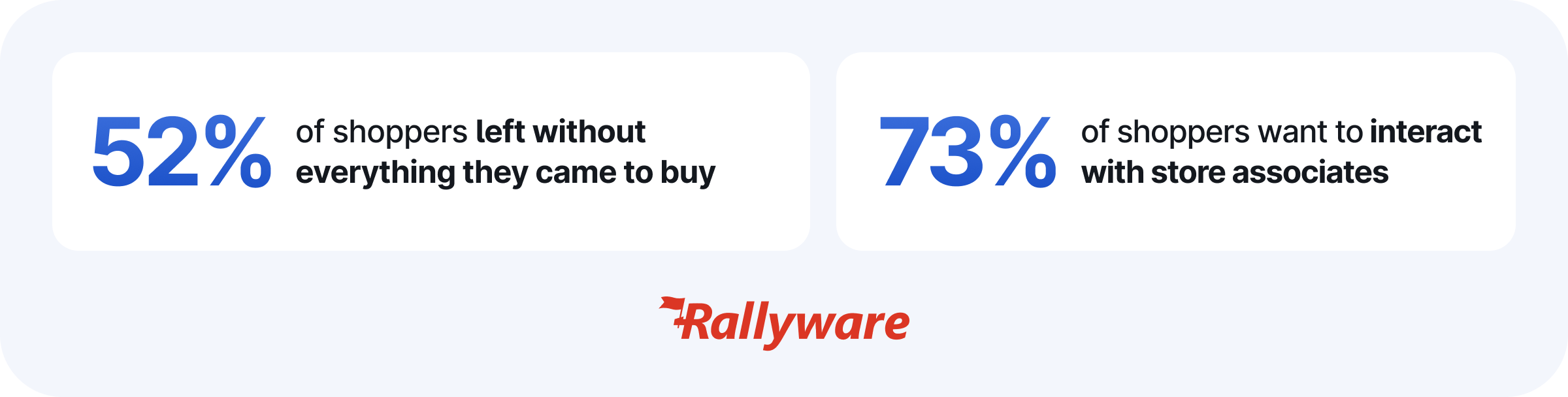
The cost shows up in the numbers retailers already track. Zebra’s 18th Annual Global Shopper Study found that 52% of shoppers left a store in the past three months without everything they came to buy. In-store satisfaction has fallen from 85% in 2023 to 79% in 2025. Yet 73% of shoppers still want to interact with store associates.
Shoppers are asking for help. Too often, the help isn’t ready.
Intent is walking through your door
Here is the reframe that matters most. A store visit is no longer a casual browse.
“If you get up today, you get dressed, you get in a car and you go to a store,” Juan said, “to us that is a massive, massive signal of intent.”
That changes the math on conversion. Ron put it plainly: you either need more traffic, or you need to convert the traffic you have. With traffic hard to buy, the lever left is the person in the aisle.
And small moves compound. Juan quoted a mentor who reminds him that a dollar in retail is never just a dollar; it is a dollar times your scale. “If your foot counter says your walkout rate is 75, what if it was 73? What if it was 72?” No one needs a 1,000% ROI story. Two points of conversion, across every store and every day, is a different year.
What owning the moment looks like
You don’t need a moonshot to start. You need a clear owner and a few operational commitments.
- Name the moment internally. Give the in-aisle decision moment a KPI owner across merchandising, store ops and brand partnerships. Shared accountability usually means no accountability.
- Map your highest-risk aisles. Start where products are complex, considered or new, such as golf, footwear tech, recovery gear or jewelry. Those are the aisles where associates are most likely to disengage and shoppers most likely to walk.
- Put answers on the floor, not in a library. Brands already produce the specs, videos and selling points. The gap is access in seconds, at the shelf, through something as simple as a barcode scan.
- Measure the moment, not the module. Track conversion, basket size and sell-through by aisle and category, not just content views or course completions.
- Bring the brand into the aisle. Brands with large retail footprints have trade marketing budgets and a direct stake in the outcome. Invite them to co-own a pilot.
The headline retail has been missing
The industry will spend this season talking about AI agents, margin and supply chain, and it should. But the decision that turns all of that investment into revenue still happens between two people in an aisle.
Rallyware’s retail execution platform is built for that moment: real-time product answers, guided upsell and substitution, and the data to prove what changed. In Part 2, we’ll look at why the way retail prepares associates for that moment has been optimized for the wrong outcome.
FAQ
What is the in-aisle decision moment?
It is the point in a store visit when a shopper, a product and an associate meet and the shopper decides whether to buy. Rallyware treats it as the in-store counterpart to Google’s Zero Moment of Truth.
How is it different from the First Moment of Truth?
The First Moment of Truth focuses on the shopper’s encounter with the product on shelf. The in-aisle decision moment adds the associate as the variable that most influences the outcome.
Why does it matter more now?
Shoppers arrive better informed, often with AI-generated research. A store visit signals high intent, so each interaction carries more revenue at stake.
Who should own the in-aisle decision moment?
Ideally a shared KPI owner spanning store operations, merchandising and brand partners, with clear conversion and sell-through metrics.
How do you measure it?
Start with conversion, basket size and sell-through by aisle, category and store, then connect those to what associates accessed and did in the moment.
News and Insights on Workforce Training & Engagement
We’re among top-notch eLearning and business engagement platforms recognized for effective training and talent development, helping to empower distributed workforces
Subscribe