Why Retailers Struggle to See What’s Happening on the Store Floor (and How to Fix It)
How Store Operations Can Orchestrate the Sales Floor to Drive More Revenue
Walk into any store, big box, specialty or luxury, and you’ll notice a common theme: the sales floor is a living, breathing organism. New promotions need to be set. Product needs replenishment. Associates need guidance. Customers need attention. And all of these demands compete in real time.
For store operations and merchandising leaders, the challenge isn’t just the volume of tasks but the constant flux that makes consistent execution difficult. Yet this chaos isn’t something to eliminate, it’s something to orchestrate. When managed well, the sales floor becomes a synchronized engine that drives higher revenue, better conversion, and stronger brand consistency across hundreds or thousands of stores.
Below, we break down how modern store ops teams can embrace the complexity of retail environments, harness it, and turn it into a strategic advantage.
1. Understand the Real Sources of Chaos
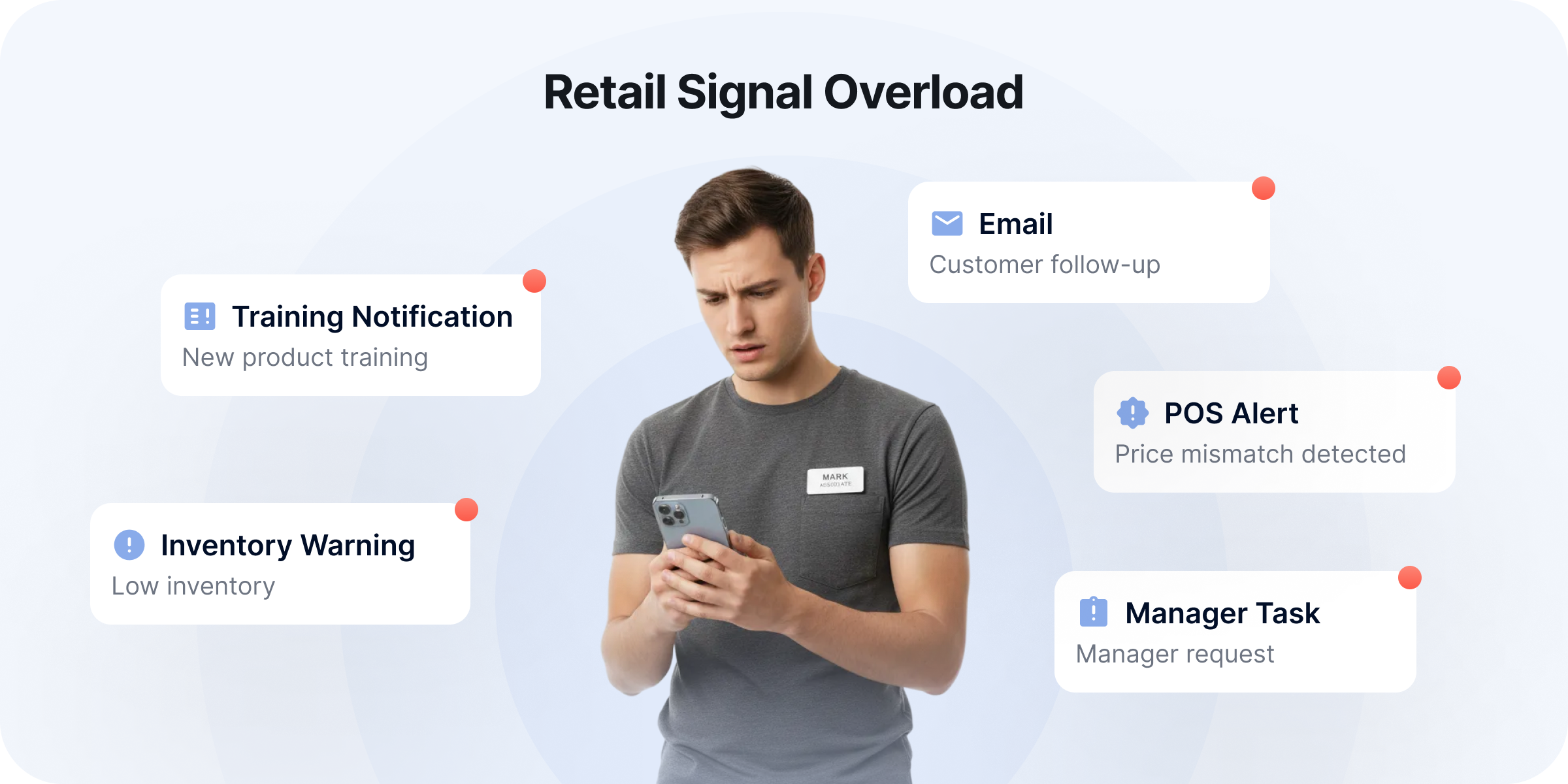
Most retail organizations assume chaos is caused by frontline inefficiency. In reality, frontline teams are usually highly capable, the problem is signal overload.
Common sources of sales-floor chaos include:
- Fragmented communication: Associates receive instructions from multiple systems, emails, apps, and people.
- Competing priorities: Promotions, markdowns, merchandising resets, customer support, and KPIs all shift by the hour.
- Lack of real-time visibility: HQ can’t see what’s happening, and stores lack the mechanism to escalate issues quickly.
- Generalized training: Associates are trained broadly, not for precise moments of need.
- Outdated workflows: Paper binders and static checklists can’t adapt as conditions change.
According to McKinsey, frontline employees spend up to 30% of their time searching for information they need to do their jobs effectively – time that could otherwise be spent with customers or executing revenue-driving tasks.
This is the business case for orchestration.
2. Shift from “Managing Tasks” to “Orchestrating Execution”
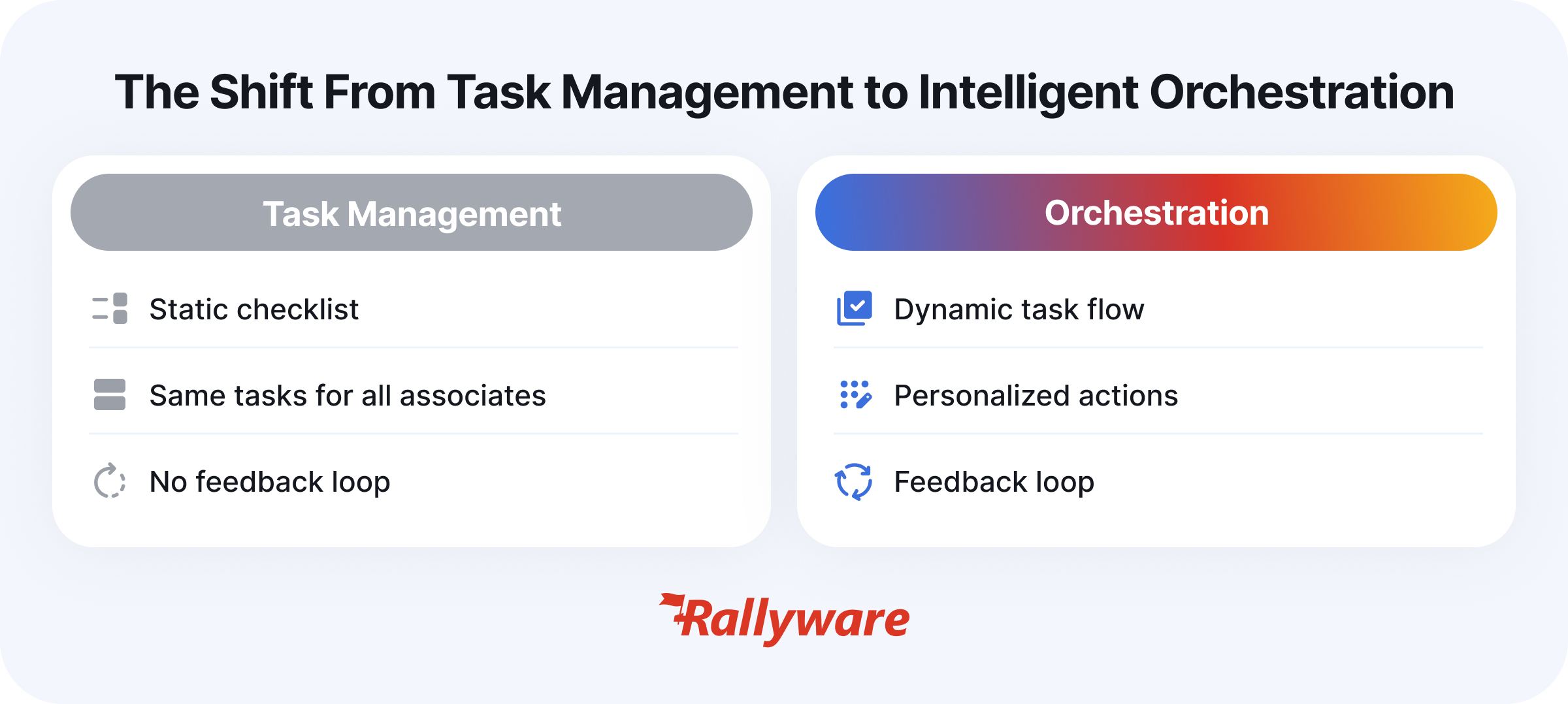
High-performing store ops leaders are embracing a new operational model, one centered on orchestration, not oversight.
Orchestration ensures:
- The right people
- Receive the right actions
- At the right time
- In the right context
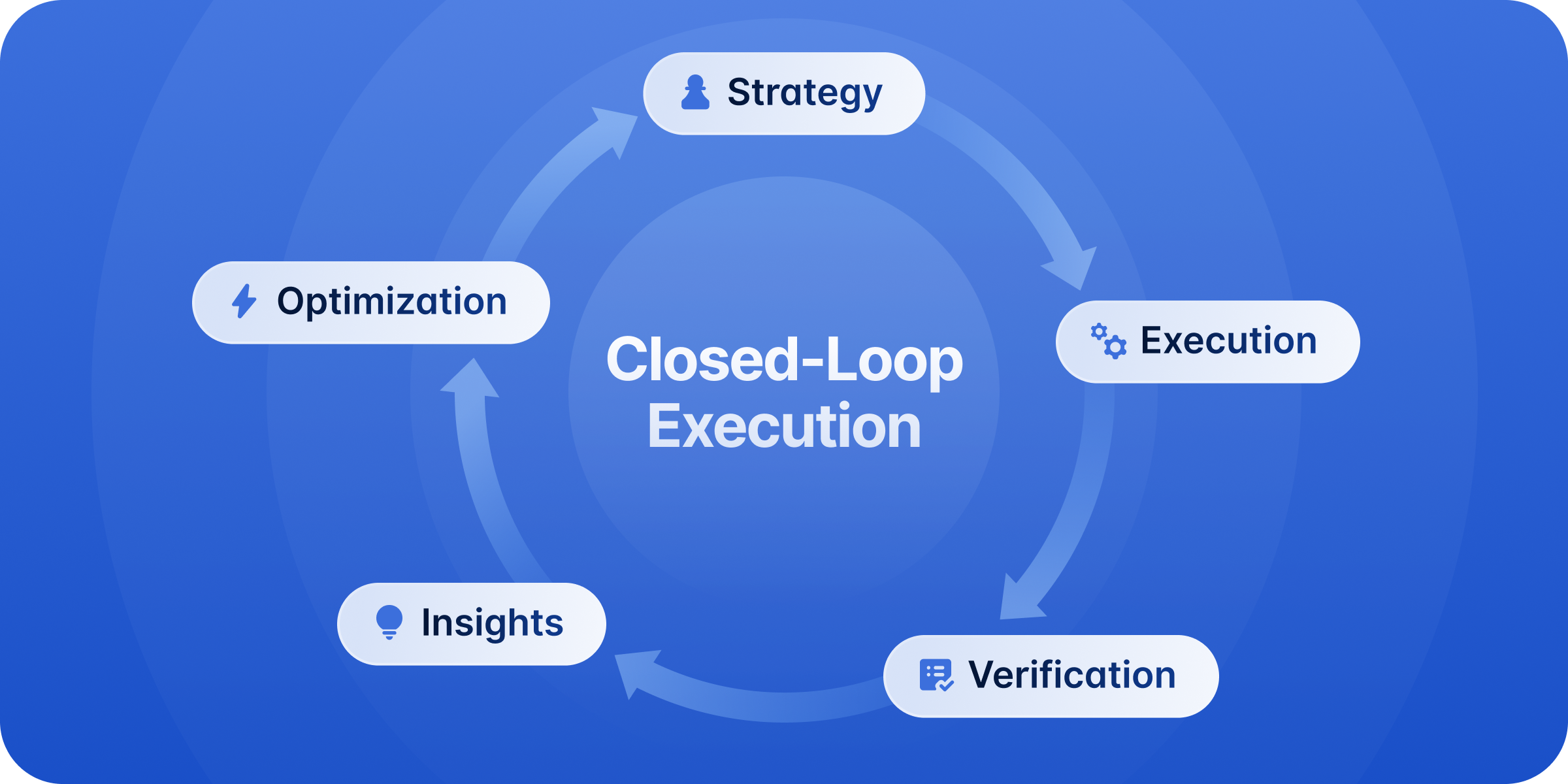
- With closed-loop feedback to verify execution
It’s the same philosophy behind outcome-driven digital organizations, now applied to the physical world of retail.
This shift reduces inconsistency and confusion – the biggest killers of in-store performance.
3. Use Intelligent Prioritization to Reduce Noise
If everything is a priority, nothing is.
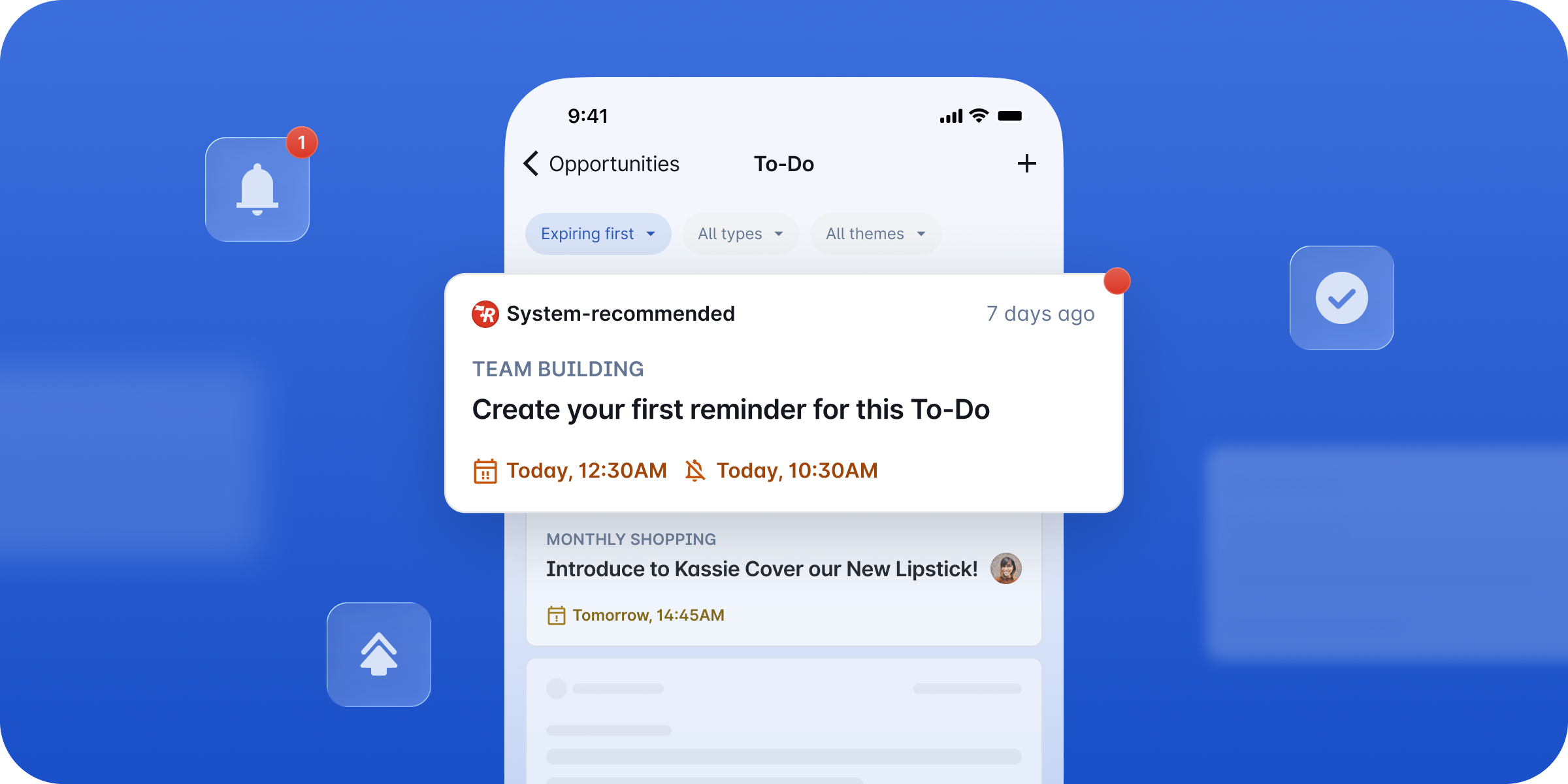
Store ops teams should adopt intelligent systems that automatically prioritize work based on:
- Revenue or margin impact
- Real-time inventory
- Store format
- Labor availability
- Location-specific demand
- Associate skill levels
Imagine this: A key product goes viral on TikTok. Inventory is high. Traffic is accelerating. The system should instantly:
- Send micro-tasks for replenishment
- Trigger guided selling content for associates
- Notify managers if displays need refreshing
Deloitte has found that retailers using real-time task automation experience up to a 25% improvement in task compliance and faster implementation of revenue-driving initiatives.
4. Deliver Real-Time, “Moment of Need” Guidance
Chaos happens in the moment:
A customer queue forms. A shipment is delayed. A promo underperforms. A high-value customer walks in.
The retailers that win empower associates with real-time intelligence, such as:
- Reprioritizing tasks during traffic spikes
- Triggering auto-notifications when shelves near out-of-stock thresholds
- Delivering micro-coaching to associates who need support
- Prompting immediate corrective actions when merchandising compliance slips
The Harvard Business Review cites that “real-time coaching improves employee confidence and performance by as much as 12%,” which directly correlates to sales growth.

5. Align Merchandising, Operations & Frontline Teams with Closed-Loop Reporting
Execution without visibility is just hope.
And hope is not a strategy.
Modern orchestration creates closed-loop reporting through:
- Photo verification
- Smart checklists
- Exception flags
- Time-stamped completion data
- Store-level dashboards
This gives HQ true operational visibility and field leaders actionable coaching moments.
6. Turn Associates into Revenue Multipliers, Not Task Machines
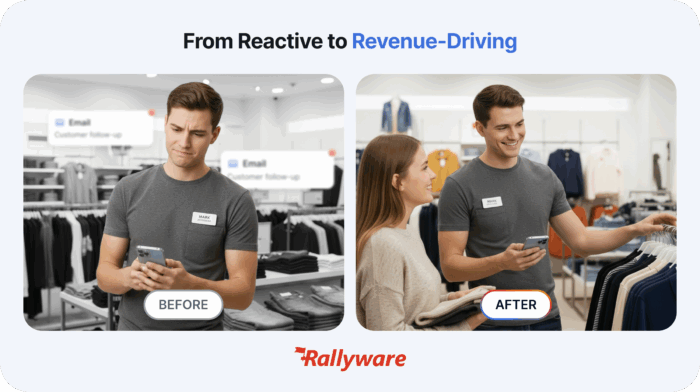
When chaos rules, associates spend their shifts reacting.
When orchestration rules, they spend their time driving value.
Associates become:
- More confident
- More customer focused
- Better aligned with store priorities
- More effective at suggestive selling
- More accountable for store performance
PwC found that 73% of customers point to experience as an important factor in their purchasing decisions.
Customer experience is driven by people, and people perform best when guided, not overwhelmed.
7. Make Continuous Optimization Part of the Culture
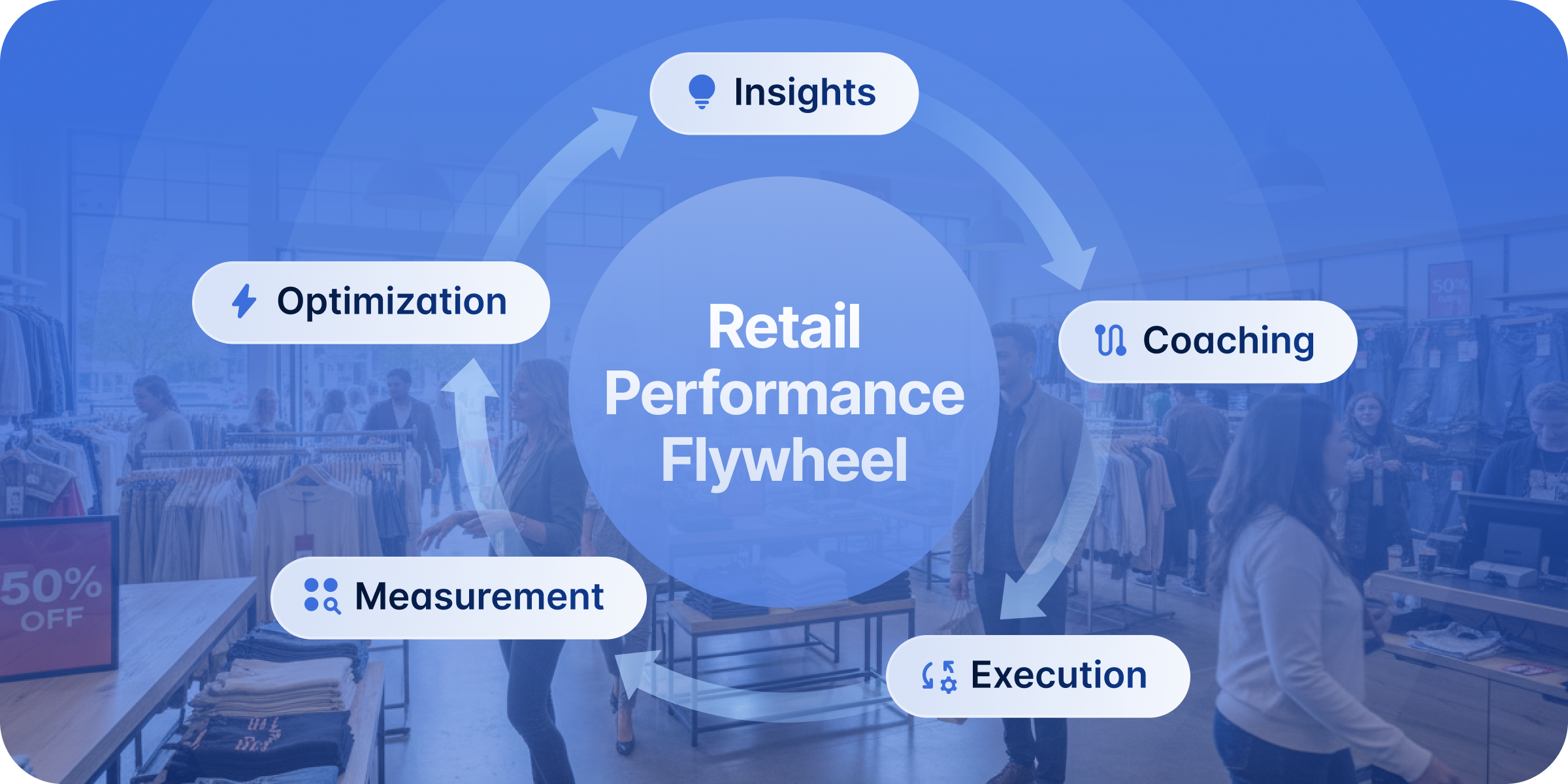
The best store ops organizations treat operational excellence as a living system, not a once-a-year priority.
Sustained orchestration requires:
- Weekly performance insights
- Feedback loops from field leaders
- Micro-coaching based on behavioral patterns
- Predictive adjustments based on forecasts
- Benchmarking high-performing stores and replicating wins
This is how retailers build resilience, and revenue, into their operating model.
Chaos Is Inevitable. Revenue Loss Isn’t.
Retail is dynamic. Unpredictable. Fast-moving. The sales floor will always contain an element of chaos.
The retailers who win aren’t the ones who try to eliminate the chaos, they’re the ones who orchestrate it.
By combining:
- Intelligent prioritization
- Real-time guidance
- Closed-loop reporting
- Associate empowerment
…store operations teams can turn daily unpredictability into a scalable revenue engine.
Chaos becomes choreography.
And the sales floor becomes a competitive advantage.

FAQ
What is sales-floor orchestration in retail?
It’s the coordination of tasks, communication, training, and data into a unified, adaptive workflow.
How does orchestration improve revenue?
It ensures stores execute the most impactful actions at the right time, leading to better compliance, higher conversion, and better customer experience.
What technology supports orchestration?
AI-enabled workforce orchestration platforms such as Rallyware that centralize communication, automate prioritization, and deliver moment-of-need guidance.
Does this apply to small or mid-sized retailers?
Yes, retailers of any size can benefit from improved execution and associate enablement.
News and Insights on Workforce Training & Engagement
We’re among top-notch eLearning and business engagement platforms recognized for effective training and talent development, helping to empower distributed workforces
Subscribe